Soccer-Europa FAQ
Passports, Trip Insurance, Permission to Travel
Everyone traveling in your group must have a valid passport from their country of citizenship. United States passport applications are available at U.S. clerical courts and local passport offices. Application for a passport can be done in person or online. Tour participants should immediately apply for passports, if they do not already have one. If you are not a U.S. citizen, it is your responsibility to obtain a visa for travel. Online, you can go to the state department website at: https://travel.state.gov/content/travel/en/passports/how-apply.html
The passport will be mailed to the applicant. Processing of the application takes a minimum of four to six weeks; spring is a particularly busy time. Therefore, it is important to apply as soon as possible, especially if the applicant needs to obtain a certified copy of the birth certificate.
On the flight to Europe, the player should hand the passport to a designated adult. Upon landing, the passport should be given to the player, and then collected again after passing through customs. Thereafter, a team official should keep the passports and all flight coupons.
Certain countries also require entrance visas especially if you are not American citizen. Please check the citizenship of each of your tour participants, and highlight this to us as soon as possible. Soccer-Europa will inform you if your group requires visas, and what the application procedures are. Visa requirements vary from country to country. If you are not an American citizen you need to call you country consulate or the passport agency to be sure you have all the proper visa documents before departure.
All tour participants agree to provide details of their full passport name to the group coordinator at least 60 days prior to the scheduled departure date. If this is not provided, or if the information provided is incorrect, the tour participant will be responsible for all air ticket change fees.
There are various forms of Travel Insurance. The two most common are:
Comprehensive Protection and Post-Departure Protection.
Comprehensive Protection generally includes all the benefits of Post-Departure protection and in addition covers Trip Cancellation
in the event something catastrophic happens and you cannot go on your trip.
Post-Departure Protection generallly covers the following items: (Compare the companies to verify
the plans as all differ slightly in regards to what is included and the amount of coverage).
 Trip Interruption (return air only)
Travel Delay ($ per day after so many hours of delay)
Missed Connection
Loss of Baggage
Baggage Delay
Emergency Medical/Dental (a minimum amount - $25000/$50000)
Medical Evacuation
Accidental Death
Trip Interruption (return air only)
Travel Delay ($ per day after so many hours of delay)
Missed Connection
Loss of Baggage
Baggage Delay
Emergency Medical/Dental (a minimum amount - $25000/$50000)
Medical Evacuation
Accidental Death
Soccer-Europa supplies each participant with Post-Departure travel insurance.
Travel insurance covers many instances of emergencies that might prevent the traveler from
traveling from one place to another. Soccer-Europa offers a number of different companies that supply travel Insurance. We recommend
that you shop and compare if you feel you need more coverage.
Soccer-Europa requires every participant to have their own Major Medical Insurance Plan above and
beyond their Travel Insurance plan.
For travel teams, U.S. Youth Soccer requests that each registered team apply for permission to travel. Please contact your local state
federation in obtaining the necessary forms to get your travel permit. Be sure to allow sufficient time in order
to receive the necessary forms back before traveling. All Applications to Travel must be complete, an incomplete
application will be returned and considered as not having ever been submitted. The cost to apply is $200 USD.
The following items need to be sent to USSF for permission to travel:
(1) A copy of the official brochure, pamphlet, invitation, or other applicable material of the tournament or games host.
(2) Four copies of the Official Roster that has been signed, stamped, or both, by the appropriate registrar and includes all players and team officials.
(3) Complete the online U.S. Youth Soccer Application to Travel
(4) USSF Application for Foreign Travel
(5) Ted Stevens Olympic and Amateur Sports Act
(6) COVID-19 player waiver uploaded prior to approval
Credit Cards, Exchanging Currency, Avoiding Loss
Do Not pack valuable, perishable, and fragile or items sensitive to the heat and cold in your checked baggage. Try to avoid these items altogether, but if you must take them, they will be safer in your carry-on bag.
Never leave your luggage unattended or take your eyes off your bags.
Learn your destination's airport code and make sure the correct one gets put on your bag.
Avoid taking luggage with flashy brand names, as it will make them more attractive to thieves.
Avoid carrying your laptop in a bag that lets everyone know you are carrying expensive electronics.
Use certified TSA locks on your luggage.
Clearly label your luggage on both the inside and outside of your bags.
Remove any items that are hanging off your luggage and could get caught on conveyor belts.
Place a trip itinerary in your luggage so your bags can easily be returned to you.
Place a unique bright marking or ribbon on your luggage so you can easily identify it. This way others will recognize that their similar looking bag did not have the markings and leave yours alone.
If an airline loses your items make a claim before you leave the airport; some Airlines will not honor claims made after you have left the airport.
Carry a list of all your items in your carry-on and leave one at home, to help you make a complete claim form if your items go missing. Carry a copy of the final list in your carry-on bags, you will be able to use it to fill out claim forms with the airline if they lose your luggage.
Consider purchasing trip insurance that offers protection for your property.
YES! This is a must!
Banks will generally place a hold on your Credit Card approvals if they are unaware you are traveling.
Any unfamiliar spending patterns (purchases abroad) will alert the banks to suspicious transactons and end up delaying your credit card approvals until they are notified.
If you notify your financial institution ahead of time with your dates of travel and the countries you will be visiting, they will explain the services that they can provide while you are on your trip and help better safe-guard your purchases + identity.
Soccer-Europa staff do not hold or handle money for tour participants. It is strongly advised that players use pre-paid or debit MasterCard/Visa cards, and that parents retain a card as well. There are always cash machines (ATMs) available for tour participants to withdraw money in local currency.
Using cards provides the best exchange rates and convenience. Charge cards, such as-Visa, Master Card and American Express, are widely accepted in Europe at stores, hotels and restaurants. Using debit cards allows parents control over budgeting from the US. Parents can add money to accounts incrementally, avoiding the rush-to-spend urge of athletes arriving in Europe. Just as with credit card foreign transaction fees, when you use your debit card to take out cash at the ATM, you may be charged a fee. Usually, it’s $2 to $7 dollars on any cash withdrawal. That being said, it’s better to withdraw a large amount of cash at once to avoid multiple fees. The percentage charged by your bank on international withdrawals is most likely fixed, so by making larger withdrawals, you’re actually getting more bang for your buck where ATM fees are concerned.
If you are taking cash, check the exchange rates prior to exchanging. Since in most countries you are charged a transaction fee each time you exchange money, the best rule of thumb is to limit your number of transactions. Your goal should be to cover your expenses without running out of money, and without having much leftover foreign currency to convert. (Don't forget, many exchange agencies will not convert coins.) Also - it’s a great idea to pre-order some cash in the local currency through a travel agency (like AAA) or larger banks like Bank of America, to make sure you have a backup method of payment, at least for your first day or two abroad.
In Spain, change money at a bank whenever possible. The exchange rates and transactions fees at banks are optimal when compared to other non-bank money exchange agencies in airports, train stations or tourist offices.
If you are arriving on a Sunday there may not be any banks or money exchanges open. The only place you will be able to obtain cash will be at an ATM machine and you need to make sure your debit card will work overseas.
While it’s not ideal to carry around large amounts of cash, travelers’ checks can be refunded if lost or stolen.
How much cash you should travel with largely depend on how long your tour is? How many excursions or places your group will be visiting? And of course, Souvenirs! Everyone will want to do some shopping.
These are all questions you should ask yourself when determining to use cash or card when traveling, and just how much cash you should travel with. But, if you want a number to work with, we suggest having $200 on hand when you land in your destination, just to be safe. If you decide to go cash-only for your entire trip abroad, then maybe factor in a bit more for your first week.
Keep in mind you’ll also want a safe place to keep your cash. Take with you what you need for the day, perhaps in a money belt or other secure items, and leave the rest in your accommodation, ideally locked up. Most hotels provide safes and/or lockboxes in their rooms, so you’ll be good.
What to Bring, How to Pack, Travel Tips
Here is a basic checklist of suggested things to bring.
You may want to add or delete items.
All your Soccer Gear (jersey, shorts, socks, shoes, shin-guards)
Passport
Money/Debit Cards
Pocket money (Approx. $25-$35 per day)
Camera
Wrist Watch and/or phone with clock app for timer + alarm
3.4 oz. Toothpaste and toothbrush - (3-1-1 Liquids Rule)
3.4 oz. Shampoo bottle - (3-1-1 Liquids Rule)
Soaps + deodorant - (3-1-1 Liquids Rule)
Shaving equipment (travel size)
One pair of dress pants + a dress shirt
Everyday clothes, including shorts, jeans, shirts and socks
Underware
Socks + sneakers and other shoes
Bathing Suit + Beach Towel
Beach + Shower Sandals
Plastic garbage bags for dirty clothes
Rain Gear / Jacket
Warmer Jacket for evenings
Detergent Packs
Air Freshener
Playing Cards, Small Board Game
Prescriptions and medications
Glasses/contact lens + spare set
Sun Glasses
Foldable travel bag (to be used as an extra bag)
Room/Game Snacks
Very Important!
Pack all your Game Uniforms, Soccer Shoes + Shin-Guards in your carry-on bag. If in the event your checked luggage
is misplaced or lost, you will still be able to play in the tournament with no issue or stress. We can always purchase a set of clothes
or necessary toiletries to hold you over until your lost luggage has been retrieved by the airlines.
As a Rule - Any essentials need to go in your carry-on bag.
Pack your toiletries, prescriptions and medications in your Carry-On Bag according to the 3-1-1 rule.
Pack at least one change of clothes + underware in your Carry-On Bag.
And lastly, pack any valuables and/or electronics in your carry-on bag. i.e. cameras, phones, laptops, tablets, etc.
Note - When you go through security, you will be asked to remove personal electronic devices larger than a cell phone from your carry-on bag and place them into a bin with nothing placed on or under them for X-ray screening.
Please keep your bag organized to help ease the screening process as it takes time for TSA officers to make sure a jam-packed, cluttered, overstuffed bag is safe.
Each passenger may carry liquids, gels and aerosols in travel-size containers that are 3.4 ounces or100 milliliters. Each passenger is limited to one quart-size bag of liquids, gels and aerosols. Common travel items that must comply with the 3-1-1 liquids rule include toothpaste, shampoo, conditioner, mouthwash and lotion.
3.4 ounces (100 ml) or smaller sized containers that fit in 1 Quart-sized, resealable bag may go in carry-on and through checkpoint security. Each passenger is allowed one plastic bag only!
Containers that are larger then 3.4 ounces (100 ml) regardless of amount inside must be in checked baggage.
All of the overseas airlines strongly advise that all groups departing from the USA to Europe arrive at the airport at least three hours before departure time. Your group will not have pre assigned seats for your flight to Europe. This is why it is so important for your group to arrive early at the airport and receive your booking assignments together as a group.
When you arrive together you will have your tickets arranged by the Airlines Ticket reservation team. This will give your group a greater chance of everyone being seated together or in very close proximity. If you have a special request, for example that a mother and daughter want to sit together, please make this known at the reservation desk when checking in. In most cases, they will honor your request.
It is also very important that your checked bags that are going under the plane are well marked with: (Name, Address, City, State, Zip + Telephone Number) and a special mark of your own so that you will be able to recognize you own bag or suitcase right away when we have to retrieve the bags from the conveyors.
Best Price Guarantee
Soccer-Europa provides the most exceptional Tour at the best possible price! Compare our tours with anyone and see for yourself!
Safe and Secure
For over 20 years Soccer-Europa has boasted a spotless saftey record. We pride ourselves on exceptionally planned tours.
Soccer-Europa Tour Agents
Some of our tour guides have been traveling throughout Europe for more than 25 years! We are able to take you to places that other tour operaters don't even know about!
Travel Guidelines
Soccer-Europa travel guidelines are readily available for all participants. We work hard to make sure all participants are familiar with all of our policies.
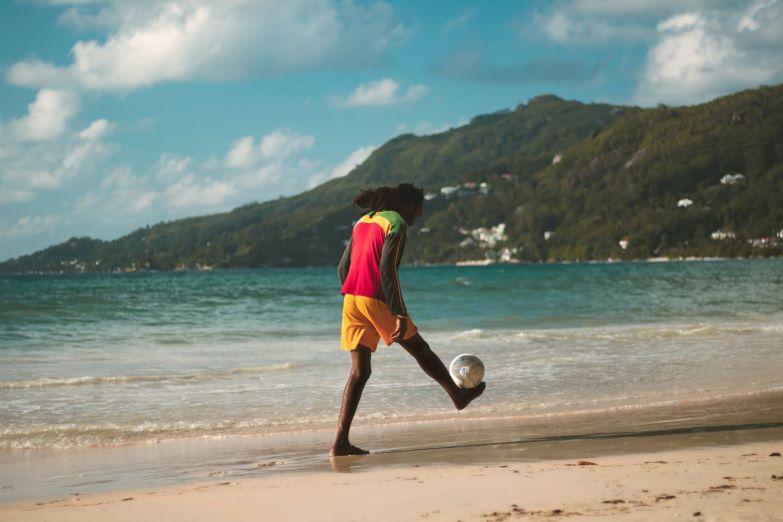
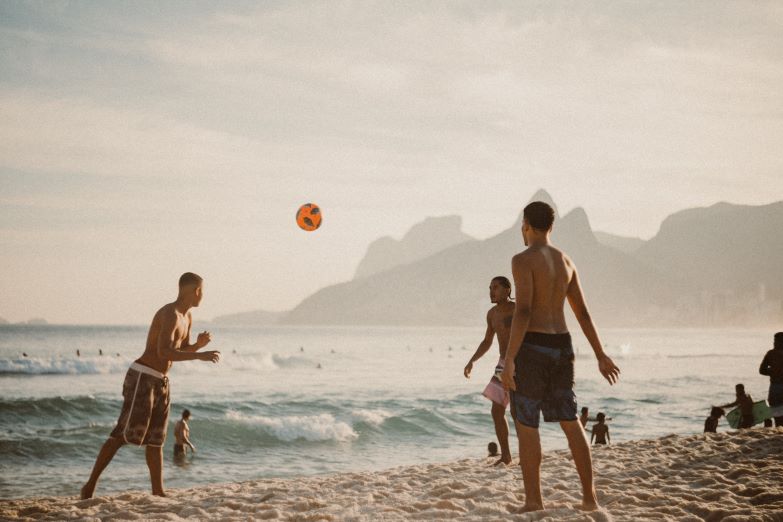
Hot Offer
Donosti Cup
San Sebastian, Spain 2027
$3995 / 7 Nights / 9 Days
Now Booking into the 2027 Season!
Top Tour Packages
Barcelona-Pamplona
/Donosti Combo
- 11 Days / 9 Nights
- 3 Days - Barcelona
- 8 Days - San Sebastian
- Plaza Espana / Las Ramblas
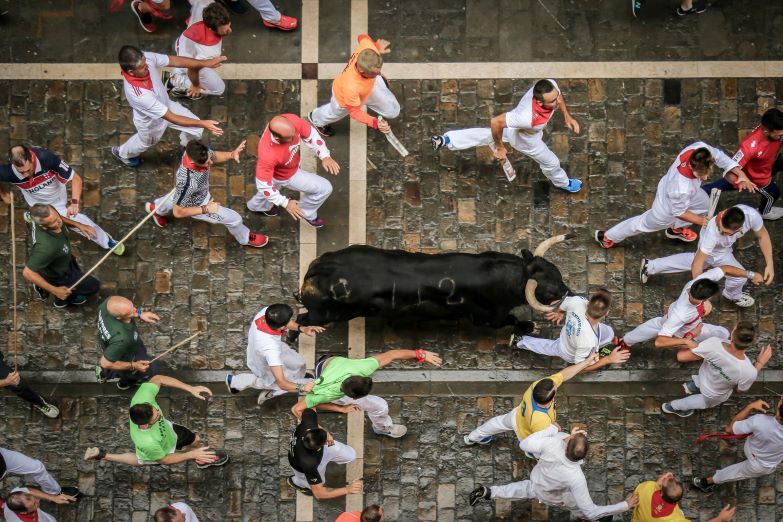
- Pamplona / Running of the Bulls
- Donosti - DJ Party
- Donosti - Delegates Palace Party
Costa Brava-Barcelona
/ IBER CUP
- 8 Days / 6 Nights
- 1 Days Barcelona Excursion
- Visit Camp Nou Stadium - FCBarca
- Costa Brava Mediterranian Sea Tour
- Top international teams
- More than 10 different nationalities
- Grass & Artificial Pitch
Barcelona-France
/ Donosti Cup
- 11 Days / 9 Nights
- 3 Days Barcelona
- 8 Days San Sebastian
- Biarrittz France Excursion
- Biarrittz Beaches & Surfing
- Donosti - DJ Party
- Donosti - Delegates Palace Party
Contact Us
50 Church Street
New York, NY 10007
+1 585-747-3516
info@soccer-europa.com